
 Image 1 of 1
Sorry. I DO NOT ship outside of the continental United States. You may still choose to subscribe, but you will not receive the note pad or mouse pad.
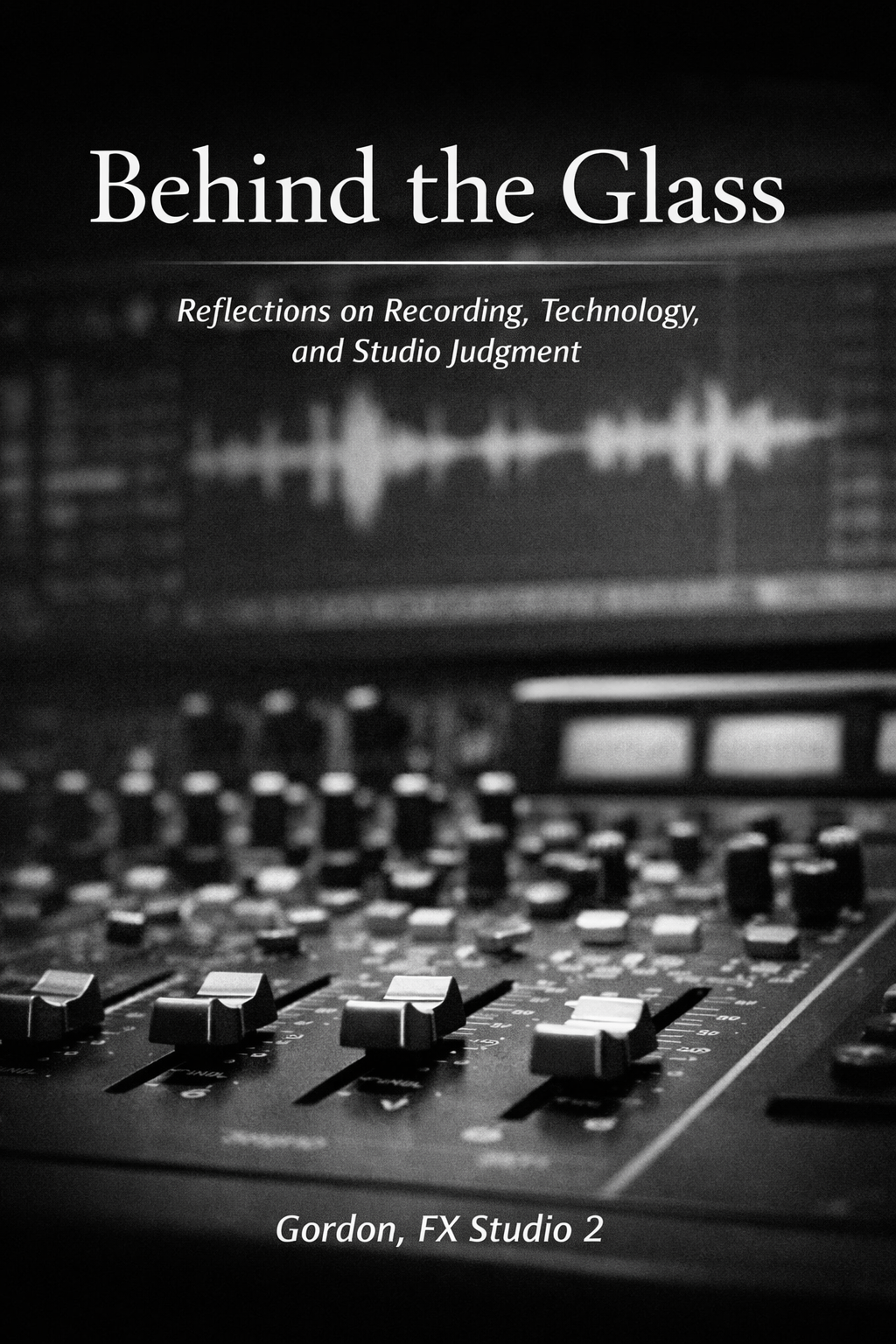
Decision First Engineering is the system. Behind The Glass is a long-form examination of how experienced engineers think while records are being made.
Not the gear they use.
Not the settings they choose.
But the decisions, priorities, and mental shortcuts that shape outcomes long before sound ever reaches a listener.
This is not a tutorial.
It is not a workflow checklist.
It is not a collection of “secrets.”
It is an attempt to articulate something most professionals understand intuitively but rarely explain:
why simplicity, judgment, and context matter more than equipment — and why myths persist even when better information is available.
Modern audio culture has no shortage of information.
What it lacks is synthesis.
We have endless reviews, comparisons, and technical explanations — yet many engineers feel less confident than ever. More options, more tools, more opinions… and less clarity.
Behind The Glass exists to address that contradiction.
It explores:
Why certain tools dominate across decades while others disappear
How experienced engineers reduce complexity rather than add to it
Why decision-making under pressure matters more than technical perfection
How industry myths form — and why they’re so difficult to let go of
This work is not about being contrarian.
It’s about being accurate.
To be clear, this is not for everyone.
Behind The Glass does not offer:
Step-by-step production recipes
Presets, templates, or gear shopping advice
Validation for expensive purchases
Optimized workflows for social media output
If you’re looking for fast answers or shortcuts, this will feel frustrating.
If you’re interested in how professionals think when there is no obvious right answer, you’ll recognize yourself in it immediately.
The essay unfolds in 12 chapters, each examining a different aspect of professional audio work — not as isolated techniques, but as interlocking habits of thought.
Rather than moving chronologically through a session, it moves conceptually:
From perception to decision
From tools to priorities
From mythology to reality
Each chapter is designed to stand alone, while also building toward a cohesive argument:
great records are the result of judgment, not accumulation.
This is meant to be read slowly. Revisited. Lived with.
Behind The Glass is written for:
Engineers who already know the basics and feel stuck anyway
Producers tired of chasing improvements that don’t translate
Listeners who want to understand why records feel the way they do
Anyone who suspects that the most important parts of the job are rarely discussed
You don’t need decades of experience to read it — but you do need patience.
Everything else published here flows outward from this work.
The essays, articles, and critiques you’ll find across the site are extensions, applications, and counterpoints to the ideas introduced in Behind The Glass.
Think of it as the lens through which the rest of the writing makes sense.
If you’ve ever wondered:
“Why do I know more than I used to, but feel less certain?”
This is where that question gets taken seriously.
Behind The Glass is included with your access license.
Membership is not positioned as a purchase, but as participation. A way to stay engaged with ideas that reward attention rather than speed.
You don’t need to join to agree with everything in this essay.
You only need to be willing to think alongside it.
Behind The Glass is not about learning what to do.
It’s about learning what to ignore, and why.
Here’s what’s included:
Your copy of our 12 part essay “Behind The Glass”. A 12 chapter essay on Reflections on Recording, Technology, and Studio Judgement. A MUST READ!
12 ADDITIONAL “Core Essays” that expand upon the ideas in the book.
EXCLUSIVE ACCESS to the FX Studio 2 Research Library
Access to the “Decision First Engineering” system
Decision First Engineering is the system. Behind The Glass is a long-form examination of how experienced engineers think while records are being made.
Not the gear they use.
Not the settings they choose.
But the decisions, priorities, and mental shortcuts that shape outcomes long before sound ever reaches a listener.
This is not a tutorial.
It is not a workflow checklist.
It is not a collection of “secrets.”
It is an attempt to articulate something most professionals understand intuitively but rarely explain:
why simplicity, judgment, and context matter more than equipment — and why myths persist even when better information is available.
Modern audio culture has no shortage of information.
What it lacks is synthesis.
We have endless reviews, comparisons, and technical explanations — yet many engineers feel less confident than ever. More options, more tools, more opinions… and less clarity.
Behind The Glass exists to address that contradiction.
It explores:
Why certain tools dominate across decades while others disappear
How experienced engineers reduce complexity rather than add to it
Why decision-making under pressure matters more than technical perfection
How industry myths form — and why they’re so difficult to let go of
This work is not about being contrarian.
It’s about being accurate.
To be clear, this is not for everyone.
Behind The Glass does not offer:
Step-by-step production recipes
Presets, templates, or gear shopping advice
Validation for expensive purchases
Optimized workflows for social media output
If you’re looking for fast answers or shortcuts, this will feel frustrating.
If you’re interested in how professionals think when there is no obvious right answer, you’ll recognize yourself in it immediately.
The essay unfolds in 12 chapters, each examining a different aspect of professional audio work — not as isolated techniques, but as interlocking habits of thought.
Rather than moving chronologically through a session, it moves conceptually:
From perception to decision
From tools to priorities
From mythology to reality
Each chapter is designed to stand alone, while also building toward a cohesive argument:
great records are the result of judgment, not accumulation.
This is meant to be read slowly. Revisited. Lived with.
Behind The Glass is written for:
Engineers who already know the basics and feel stuck anyway
Producers tired of chasing improvements that don’t translate
Listeners who want to understand why records feel the way they do
Anyone who suspects that the most important parts of the job are rarely discussed
You don’t need decades of experience to read it — but you do need patience.
Everything else published here flows outward from this work.
The essays, articles, and critiques you’ll find across the site are extensions, applications, and counterpoints to the ideas introduced in Behind The Glass.
Think of it as the lens through which the rest of the writing makes sense.
If you’ve ever wondered:
“Why do I know more than I used to, but feel less certain?”
This is where that question gets taken seriously.
Behind The Glass is included with your access license.
Membership is not positioned as a purchase, but as participation. A way to stay engaged with ideas that reward attention rather than speed.
You don’t need to join to agree with everything in this essay.
You only need to be willing to think alongside it.
Behind The Glass is not about learning what to do.
It’s about learning what to ignore, and why.
Here’s what’s included:
Your copy of our 12 part essay “Behind The Glass”. A 12 chapter essay on Reflections on Recording, Technology, and Studio Judgement. A MUST READ!
12 ADDITIONAL “Core Essays” that expand upon the ideas in the book.
EXCLUSIVE ACCESS to the FX Studio 2 Research Library
Access to the “Decision First Engineering” system
Sorry. I DO NOT ship outside of the continental United States. You may still choose to subscribe, but you will not receive the note pad or mouse pad.