If you’ve made it this far into the website, great!. Clearly you understand that reading each section in its entirety is critical for a thorough understanding of what we aim to achieve, for you, our readers. So, please. Take your time and read through this page. Gain an intimate understanding of its value.
What Is Decision-First Engineering (DFE)?
A Plain Definition
Decision-First Engineering (DFE) is a professional decision architecture system for recording engineers working inside modern, high-option studio environments.
It exists to solve one core problem:
Modern studios no longer limit engineers.
They overwhelm them.
Unlimited tools create unlimited possible decisions.
Unlimited decisions create hesitation.
Hesitation erodes momentum, identity, and finish rate.
DFE restores direction before execution , so creative work can move forward with intent.
What DFE Is, And What It Is Not
DFE is not:
A mixing technique
A plugin strategy
A gear philosophy
A productivity hack
A replacement for creative instinct
DFE is:
A decision control system
A session direction framework
A creative authority model
A human-centered workflow architecture
A method for protecting authorship inside complex production environments
DFE does not tell engineers what to like.
It ensures they can commit to what they choose.
The Core Problem DFE Solves
Most stalled sessions are not caused by lack of skill.
They are caused by:
Too many simultaneous decisions
Unclear mix intent
Endless revision loops
Reactive instead of directed work
Loss of sonic identity
Decision fatigue disguised as “perfectionism”
DFE reframes the studio as a decision environment, not just a technical environment.
Because records are not built from tools. They are built from sequences of decisions.
2 Tiers
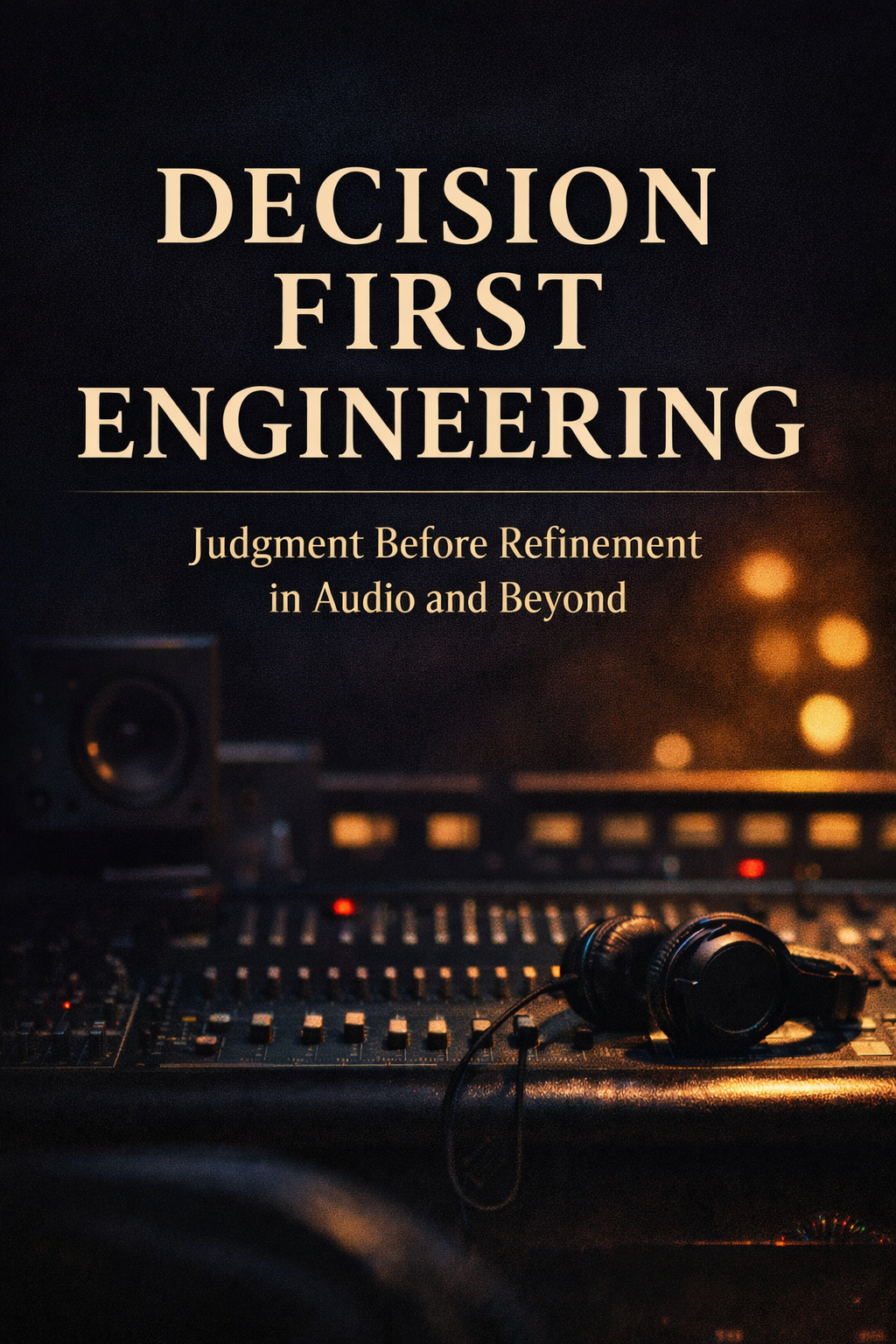
Tier 1: “Behind The Glass” — The Book That Introduced The DFE System, and Supporting Essays
FREE, When You Join The List
The foundational 12-chapter essay exploring:
How studios really work.
Why certain gear myths persist.
The psychology of sessions, signal flow, and decision-making.
What separates functional studios from legendary ones.
This is not a tutorial. It’s a framework you’ll return to as your career evolves, delivered as a reference, not disposable content.
The Core Essays
Behind The Glass establishes the framework.
These twelve essays do the work of pressure testing it.
Each essay in this collection expands on a core principle introduced in the book. Not by repeating it, but by examining how it holds up in real-world conditions. Together, they form a structured progression: from how decisions are shaped, to why certain tools endure, to how experienced engineers reduce complexity rather than add to it.
This is not a series meant to be skimmed. Taken as a whole, these essays function as a reference point you’ll return to, not because the information changes, but because you will.
Read them in order, or revisit them as needed. Their value compounds with experience. Over time, they help replace guesswork with clarity, and habit with intention.
Yours FREE for joining the List. No annoying spam. That’s a promise!
Tier 2: The FX Studio 2 Research Library
(Recording Session Methodologies For The Modern Recording Studio)
A peer-informed, practice-driven research archive dedicated to the study of professional decision making in audio engineering, hybrid studio systems, and AI-augmented creative work.
The FX Studio 2 Research Library exists to address a gap in modern audio education: the absence of formal study around professional judgment.
This membership gives you permanent access to a curated research library that would cost thousands to commission independently.
Who This Library Membership Is For
This membership is for you if:
You care why things work, not just how
Studio owners who’ve purchased enough gear and want better results
You want to build a studio or career on understanding, not hype
You value depth over immediacy
It may not be for you if:
You want quick tips and shortcuts
You prefer constant content over considered ideas
You’re looking for trends instead of principles
That’s intentional.
Lifetime Access License: 49 USD · Domestic shipping included
Why $49
DFE is a professional methodology, not informational content.
You are not purchasing education.
You are entering a working decision system designed for long-horizon professional use that:
changes how sessions are run
prevents specific failure patterns
creates repeatable decision authority
Content is not updated to chase attention. It’s updated when there’s something worth saying.
Members aren’t paying for frequency. They’re investing in clarity, context, and perspective — the things that quietly separate professionals from hobbyists over time.
If that resonates, welcome.
If not, no hard feelings, there’s plenty of content elsewhere.
Because this isn’t content, it’s a way of thinking.
Gordon C White (aka G Sharp Jamz)
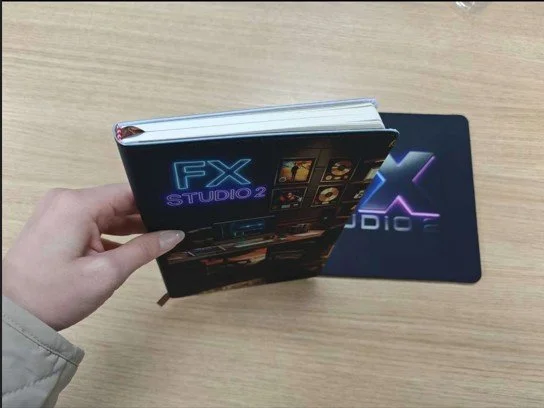
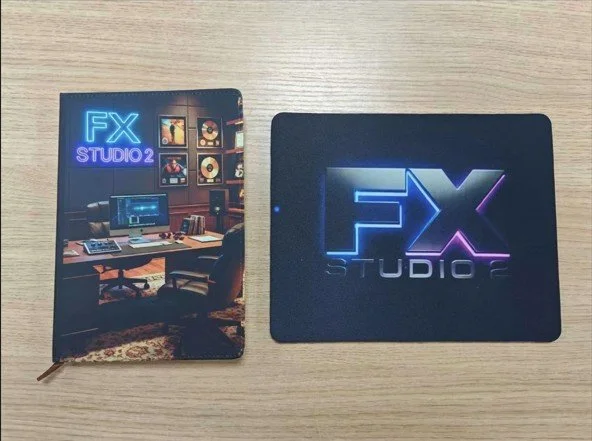
Members also receive a small gift from G Sharp Jamz. Nothing flashy, but practical items every studio owner needs on a daily basis. A Decision Journal, and a glide surface, to enhance your workflow. Sorry. I DO NOT ship outside of the continental United States. (For now) You may still subscribe, but you won’t receive the journal or glide surface.
The Long-Term Vision
DFE is designed to function as:
A professional methodology
A teaching framework
A studio decision standard
A human-AI creative governance model
Not a trend.
Not a workflow hack.
Not a temporary optimization strategy.
A decision system built for long-horizon creative work.
The Short Version
The DFE System exists to answer five questions:
Why do sessions lose direction?
What should happen when they do?
How should sessions be structured to prevent it?
How do we protect decisions once they’re made?
How do we preserve human authorship in AI-assisted studios?
Closing
DFE begins with one simple premise:
Recording is not primarily a technical process.
It is a decision process performed inside a technical environment.
The DFE System exists to make those decisions visible, structured, and protected.
Because in the end, Sound is the result, decisions are the cause.
Includes:
The complete Decision First Engineering Research Library Collection
The three tiers of the Research Library:
Foundations of Decision
Advanced - Hybrid - AI Decisions
Teaching, Legacy, and The Transfer Of Judgement
The curriculum, “Workflow, Judgement and Professional Authority”
Includes: 22 essays in all, ( New material added monthly) companion videos + The 5 Operating Layers of DFE
Section 1: "Foundations of Decision”. 6 essays and companion videos +The 5 Operating Layers of DFE specifically designed for this season
Section 2: "Advanced · Hybrid · AI Decisions". 8 essays and companion videos + The 5 Operating Layers of DFE specifically designed for this season
Section 3: "Teaching, Legacy, and the Transfer of Judgment". 8 essays and companion videos + The 5 Operating Layers of DFE specifically designed for this season
Note: The videos are available publicly on our YouTube channel, FX Studio 2. This website and the YouTube channel are not duplicates of each other, nor are they repetitious. The essays compliments the videos. Additional topics will be added to the website as I determine they are necessary.
A very blunt self-assessment to help you decide if this is for you
This Is Not for You If:
If you’re looking for shortcuts, this isn’t for you.
If you want a list of “top 10 plugins you must own,” this definitely isn’t for you.
If you believe the difference between amateur and professional work is one more purchase, one more update, one more recommendation you’re going to be uncomfortable here. That a good thing, because comfort is what keeps most engineers exactly where they are.
If You’re Collecting Tools Instead of Results
There’s a certain type of person in this industry who is always almost ready.
Almost ready to mix professionally. Almost ready to open a studio. Almost ready to release work that stands on its own. They have immaculate plugin folders. Perfectly organized presets. Endless opinions about gear they’ve never used under pressure. What they don’t have is finished work that holds up without explanation.
If that describes you—and you’re not interested in changing— this isn’t for you.
If You Need Validation Before You Decide
Some people don’t want answers, they want permission. They want forums to agree, reviews to confirm, and influencers to co-sign their instincts. They confuse consensus with competence.
Here’s the problem:
Sessions don’t wait for validation. Artists don’t care what Reddit thinks. Deadlines don’t negotiate. If you freeze without external approval, you’ll mistake information for progress forever, and this system will frustrate you.
If You Think “Limitation” Is a Marketing Trick
You’ve heard it before:
“Use fewer plugins.” “Work with constraints.” “Learn your tools deeply.” And you rolled your eyes because surely more must be better.
Here’s the reality:
Limitation isn’t a philosophy, it’s a diagnostic. If you can’t produce clarity with less, more will only expose it faster. If that feels threatening rather than clarifying, you’re not ready for this conversation.
If You Want to Feel Smart Instead of Being Effective
There’s a version of audio culture that rewards sounding knowledgeable more than sounding good. Endless terminology along with abstract debates, coupled with theoretical perfection with no real-world friction.
We care about:
decisions under pressure
outcomes that survive time
systems that work when things go wrong
If you want to impress people who don’t finish their own work, you won’t find much to agree with here.
Who This Is For
This is for people who:
finish things
take responsibility for their decisions
accept that taste is developed, not downloaded
understand that confidence is earned through repetition, not purchases
don’t need hype because they have standards.
One Final Thing
If you feel defensive reading this, that’s useful information. Not about you as a person, but about where you’re trying to go.
This isn’t exclusion for ego’s sake. It’s filtration. Because the fastest way to build something meaningful is to stop trying to serve everyone.
If this repels you, it’s working.